Every search an employee runs on an internal knowledge base is a small act of honesty. It tells you what they need to know, in their own words, at the moment they need it. The searches that return nothing tell you even more.
Most organisations collect this data and never look at it. Search logs sit inside the platform, unread, while L&D teams and content owners rely on annual audits, survey feedback and the occasional escalation to work out where their knowledge base is falling short. By the time a gap shows up in those channels, it has usually already cost something: a delayed onboarding, a compliance error, a customer given the wrong answer.
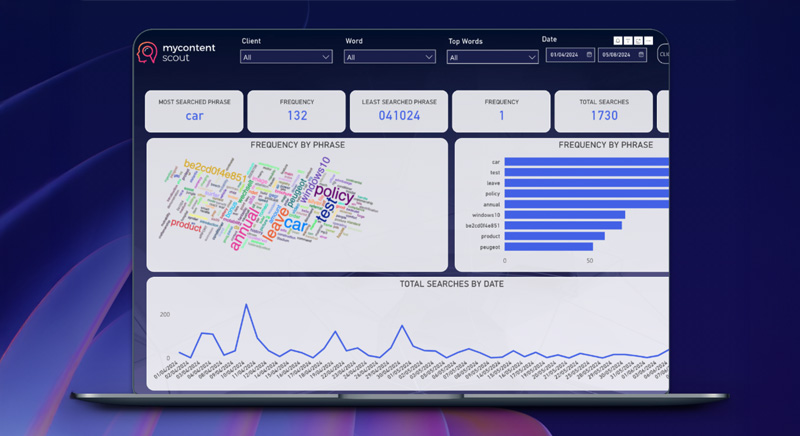
Treated properly, search data is an early warning system. It shows where knowledge is missing, where it is hard to find, and where it has quietly gone out of date.
The Cost of Not Finding Things
The time lost to searching is well documented. The McKinsey Global Institute estimated that the average interaction worker spends nearly 20% of the working week looking for internal information or tracking down colleagues who can help. It also found that a searchable record of company knowledge could cut that time by as much as 35%.
The experience has not improved much as tools have multiplied. A Gartner survey of 4,861 employees found that 47% of digital workers struggle to find the information they need to do their jobs effectively. The average desk worker now uses 11 applications, up from six in 2019. More systems have meant more places for knowledge to hide, and a weaker case for relying on enterprise search that nobody is monitoring.
When people cannot find an answer, they ask someone or work it out themselves. Panopto's Workplace Knowledge and Productivity Report found that US knowledge workers lose 5.3 hours a week waiting for information from colleagues or recreating knowledge that already exists. The same research found that 42% of institutional knowledge is unique to the individual who holds it, which is exactly the kind of knowledge gap that slows employee onboarding when someone leaves.
For learning and development teams, this lands at an awkward moment. The CIPD's Learning at Work 2023 survey found that only 59% of learning practitioners felt they could respond agilely to changing skills needs, down from 69% in 2021. Teams are being asked to move faster with less visibility of where the real gaps are.
What Your Search Data Is Already Telling You
Search logs are one of the few sources of unprompted employee feedback in an organisation. Nobody fills in a survey to say they could not find the updated expenses policy. They just search for it, fail, and message a colleague. The search log captures that moment.
Read well, search analytics surfaces three distinct signals.
1. Questions with no answer
Zero-result searches are the clearest sign of a knowledge gap. If dozens of people a week search for "parental leave policy" or "new CRM login" and get nothing back, the content either does not exist or is not where people expect it. A study of search analytics in a library discovery system found that 44% of known-item queries in its sample failed to return the right result, and some of those failures involved items the system held but had described poorly. To the person searching, missing content and badly labelled content look the same.
2. Questions with the wrong answer
A search can return results and still fail. When people click a result, leave quickly, then search again with different wording, the content they found did not help. Patterns of rewording and rapid exits point to material that is unclear, too long, or written in language employees do not use.
3. Questions that suddenly spike
A sharp rise in searches on a topic usually means something has changed: a new system, a restructure, a regulatory update, a product launch. Spikes show L&D teams where demand is forming before anyone has requested a course. They also show which teams are asking, so support can be targeted rather than rolled out to everyone.
Together, these signals turn a self-service knowledge base from a static library into a live map of what the organisation does not yet know.