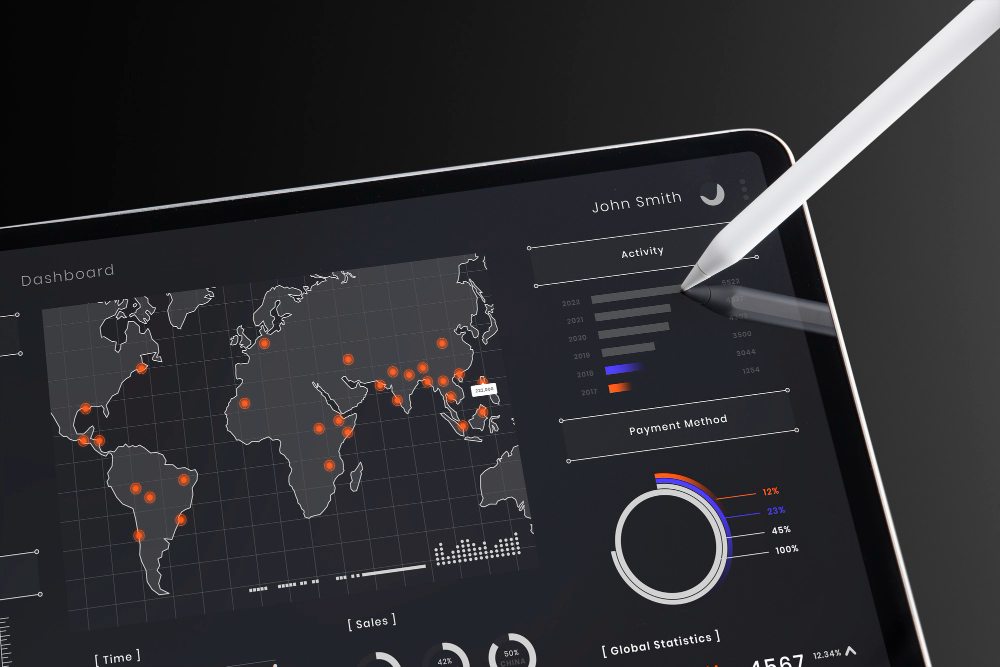
In most organisations, L&D is one of the largest discretionary budget lines. It is also one of the least measurable. This is not a data problem - it is an integration problem.
Every year, L&D teams deliver training programmes, report on completion rates, and present attendance figures to their leadership. And every year, the same conversation happens in the budget cycle: what are we actually getting for this investment? The honest answer, in most cases, is: we don’t know. Not because the programmes are not working, but because the data that would prove it is sitting in three different systems, none of which talk to each other.
The Scale of the Problem
The measurement gap in enterprise learning is well documented. Only 29% of L&D leaders feel confident proving ROI to their organisation (AIHR, 2025). Only 13% of companies currently evaluate the ROI of their L&D programmes in any meaningful way (360Learning). For a function that routinely accounts for millions of pounds in annual spend, this is a credibility crisis.
The consequences are predictable. When budgets tighten, L&D is disproportionately cut because it cannot demonstrate its value with the same precision as sales, marketing, or operations. Programmes that are genuinely driving performance get cancelled alongside ones that are not. And the L&D function loses the seat at the strategic table that it has spent years trying to earn.
The problem is not that L&D programmes don’t work. The problem is that the data proving they work is invisible to the people who control the budget.
Why Traditional Reporting Fails
The metrics most L&D teams report on — completion rates, attendance figures, learner satisfaction scores — are what the industry calls ‘vanity metrics’. They tell you how many people participated in something. They do not tell you whether it changed anything.
A completion rate of 94% on a mandatory compliance module tells a compliance officer what they need to know. It tells a CFO nothing about whether that training reduced the organisation’s risk exposure. An attendance figure of 2,400 for a leadership development programme tells the L&D team the logistics worked. It tells the Chief People Officer nothing about whether those 2,400 managers are having better conversations with their teams.
The gap between activity metrics and outcome metrics is where L&D credibility lives and dies. And closing it requires connecting learning data to the operational data that actually drives business decisions — productivity, error rates, time to competency, incident frequency, employee retention.
Why the Integration Problem is Structural
Most enterprise organisations run their learning across multiple disconnected systems — an LMS here, a virtual classroom platform there, a separate tool for compliance tracking, another for skills assessment, perhaps a VR training platform for operational scenarios. Each system produces data in its own format, visible only through its own interface.
The result is that producing a coherent picture of learning impact requires someone to manually extract data from each system, reconcile different formats and definitions, and compile a report that is already out of date by the time it reaches the people who need it. For most L&D teams, this is a part-time job that consumes time that should be spent on programme design.
The structural problem is not the absence of data. It is the absence of a unified layer that connects the data. Every system is generating signals. None of them are speaking to each other.
What Executives Actually Want to See
When executives ask about learning ROI, they are rarely asking for a more sophisticated version of a completion report. They are asking four questions, and they want specific answers to each:
- Are our people getting more capable at the things that matter to business performance?
- Is our compliance and safety training reducing our operational risk?
- Are we developing the leaders and managers we need at the pace the organisation requires?
- Is the investment in learning delivering more value than we would get from spending that money differently?
These are not questions an LMS can answer from its own data. They require learning data to be connected to operational performance data — productivity metrics, incident rates, quality scores, retention figures, time-to-competency measures. The learning activity is only meaningful in the context of what it changes.
Three Questions Every CLO Should Be Able to Answer
Before investing in new measurement infrastructure, it is worth testing the current state with three simple questions. If you cannot answer them clearly and quickly, the measurement gap is costing you.
1. What is our time-to-competency for a new joiner in a critical role?
Not how long the induction programme runs. How long from start date to the point where the individual is performing at the expected standard. If you cannot measure this, you cannot demonstrate improvement when you change the training approach.
2. What is the completion-to-performance correlation for our top five programmes?
For each of your most significant learning programmes, can you show a measurable relationship between completing the programme and improved performance on a relevant business metric? If not, you are investing in activity rather than outcome.
3. What is our compliance coverage in real time, by team and site?
Not at the end of the quarter when someone compiles the report. Right now. If a regulator asked today, could you produce an accurate, current view of compliance status across the organisation within the hour? For most enterprises, the honest answer is no.
What a Unified Analytics Layer Changes
The solution to the measurement gap is not more reporting tools. It is a single layer that connects data from every component of the learning ecosystem — LMS completions, virtual classroom attendance, immersive training scores, AI coaching progression, knowledge platform usage — and presents it in dashboards designed for decision-making rather than data archaeology.
When learning data is unified, the questions executives ask become answerable in real time. Time-to-competency becomes a tracked metric. Compliance coverage is visible by team, site, and individual. Learning activity can be correlated with operational performance data to identify which programmes are changing behaviour and which are not.
Critically, this does not require replacing the systems that are already generating data. An enhancement-first analytics architecture connects to existing infrastructure, drawing data from wherever it lives, and presenting it through a unified interface. The investment is in the connection layer, not in migrating platforms.
What unified learning analytics makes possible
✓ Real-time compliance status by team, site, and individual — audit-ready without manual compilation
✓ Time-to-competency tracked as a KPI and improved through targeted programme design
✓ Learning activity correlated with operational performance to identify what actually changes behaviour
✓ Board-level workforce capability reporting without a three-day report-building exercise
✓ Budget conversations led by outcome data rather than activity statistics
The Conversation Worth Having
L&D teams that prove their value do not do so by reporting more activity. They do so by connecting learning to the outcomes their organisations care about — and having the data infrastructure to make that connection visible. The measurement gap is closing for the organisations willing to address it structurally. For those that are not, the budget conversation will continue to be difficult.
FabricAcademy’s Analytics and Reporting capability connects every component of your learning ecosystem into a single real-time view of workforce performance. Find out how it works.
Explore Analytics and Reporting →