There's a difference between having access to learning and having a place to learn.
Most enterprise organisations have built the former. An LMS sits at one end of the spectrum and a library of e-learning content at the other, connected by a functional but uninspiring portal that most people access only when they need to complete something required of them. Training happens. Boxes get ticked. The portal closes.
That's access to learning. It's not a learning culture.
A learning culture has a different quality. People return to it voluntarily. They explore it. They connect with colleagues through it. They identify with it as something that belongs to them and their organisation, not just a system they log into when they have to.
For organisations with distributed workforces, building that culture has always been harder. There's no shared physical space, no academy building, no corridor conversation. Teams are spread across sites, time zones, and countries, connected by technology but often lacking any shared learning environment that feels genuinely present.
This is the problem FabricAcademy's Virtual Environments capability was built to solve.
What a Virtual Environment Actually Is
The term 'virtual environment' covers a lot of ground, so it's worth being specific about what we mean.
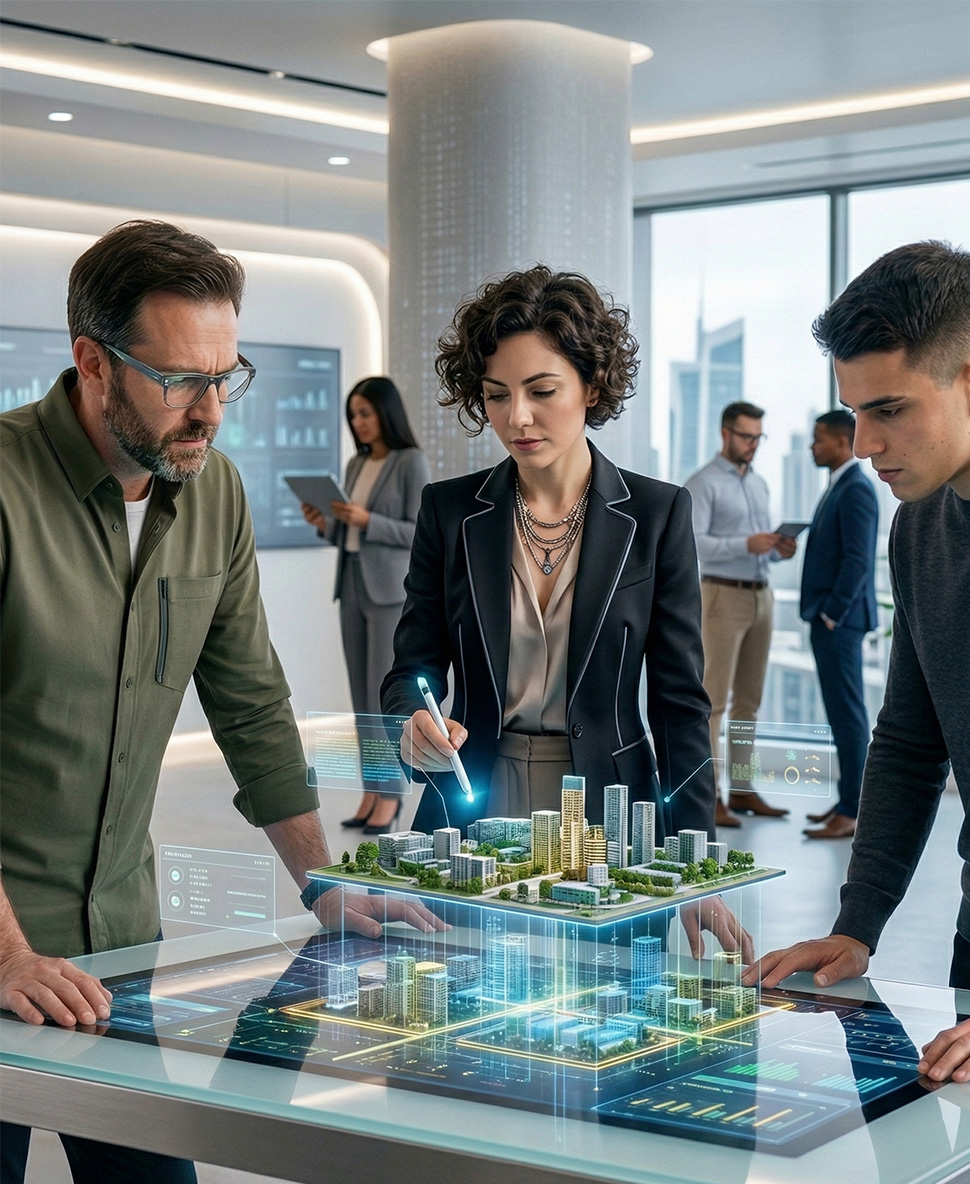
FabricAcademy's Virtual Environments capability creates persistent, navigable 3D spaces that your people can explore from any browser, a laptop, tablet, or mobile device, without a VR headset. These aren't video calls with a digital backdrop. They're genuine spatial environments with real structure: learning zones, event spaces, resource libraries, and connection areas.
There are two ways we build them.
The first is facility scanning. Using Matterport technology, we scan your real-world facilities, control rooms, warehouses, operational environments, training centres, and convert them into navigable digital replicas. A new starter can explore the plant they'll be working in before their first day on site. A field engineer can familiarise themselves with a facility they've never physically visited. A team spread across multiple locations can navigate a shared, accurate digital representation of their working environment.
The second is purpose-designed virtual academies. We build branded digital environments designed specifically around your organisation's identity, culture, and learning architecture. Not a generic template, a digital home for your learning programme, with zones dedicated to different capability areas, event spaces for synchronous sessions, and resource libraries accessible from anywhere within the environment.
The Practical Value of Being There
Facility scanning through Virtual Environments addresses a genuinely costly operational problem: the challenge of preparing people for environments they haven't yet physically accessed.
Onboarding to complex or hazardous environments often requires site visits that are logistically difficult, expensive, or unsafe to arrange ahead of a start date. Safety inductions that rely on physical presence can't easily scale across distributed teams. Multi-site organisations struggle to give new employees any meaningful sense of the environments they'll be working in before they arrive.
A digitised facility changes all of that. Learners can navigate the space, explore equipment, access embedded safety information, and build genuine spatial familiarity, without the logistical overhead of a physical visit and without any real-world risk.
The environment persists. It's available 24 hours a day, seven days a week, from any browser. Someone joining a team in a different time zone can complete their facility induction at the time that works for them, with the same quality of experience as someone sitting in the same building as the trainer.
Events, Connection, and Belonging
One of the things that distinguishes a genuinely capable virtual environment from a content library is what it can do beyond self-directed learning.
FabricAcademy's virtual environments support event hosting, inductions, town halls, learning festivals, and synchronous capability sessions that bring teams together in a shared space regardless of where they're physically located. Teams can gather, collaborate, and learn together in an environment that belongs to their organisation.
This isn't just a nice feature. For distributed organisations trying to build a genuine learning culture, it's a structural enabler. When your people have a shared virtual home for learning, they begin to identify with it. It becomes part of how they experience the organisation, not just a system they use occasionally.
All activity within the virtual environment is tracked and feeds directly into the unified analytics layer, so spatial learning sits alongside every other component of your programme in a single, coherent view.
A Platform vs a Culture
The distinction between a learning platform and a learning culture isn't a philosophical one. It shows up in measurable ways: in how often people voluntarily engage with learning resources, in how connected distributed teams feel to the organisation's development goals, in how quickly new starters feel confident and capable.
A virtual environment is what separates the two. It gives your academy a home, your brand a presence, and your learners an environment they can return to, explore, and genuinely identify with.
Let's build something your people will want to come back to. Book a strategy session with FabricAcademy and let's explore what a virtual learning environment could look like for your organisation.


-p-2000.jpg)